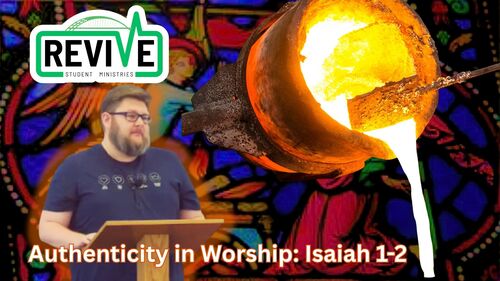
Authenticity in Worship: Isaiah 1-2
Mountains, Forced Perspective, and the Prophetic Vision: Understanding Isaiah's Timeless Message
The book of Isaiah presents a unique challenge to modern readers. Unlike a straightforward narrative that moves from beginning to end, Isaiah's prophecy jumps through time, weaving together visions of near judgment, distant hope, and ultimate redemption. Understanding how to read this prophetic book requires us to shift our perspective—to see beyond the surface and recognize that what appears close together may actually be separated by vast expanses of time.
The Mountain Range Analogy
Imagine standing far from a mountain range. From that distance, the peaks appear as a single shadowy line against the horizon. You can't distinguish which mountains are closer and which are farther away. But as you approach, the distance between each peak becomes clear. Some mountains that seemed adjacent are actually miles apart.
This is precisely how Old Testament prophecy works. The prophets looked into the future and recorded what they saw, but they didn't always understand the distance between the events they were witnessing. They saw Christ's first coming and His second coming in the same vision, unable to perceive the nearly two thousand years (and counting) that would separate these two monumental events.
Think of it like forced perspective in filmmaking—where characters appear to be standing right next to each other on screen, when in reality they're positioned far apart to create an optical illusion. The prophets wrote the "script" of what they saw, but only God, the Director, understood the true timeline and distance between events.
A Message to Sodom and Gomorrah?
Isaiah's opening chapters deliver a shocking message to the people of Judah, living approximately 700 years before Christ. He addresses them as "rulers of Sodom," comparing Jerusalem to the notoriously wicked cities destroyed generations earlier. This wasn't hyperbole—it was a devastating indictment of their spiritual condition.
The people were performing all the right religious rituals. They went to the temple daily, offered sacrifices, observed the Sabbath, celebrated the appointed feasts, and followed the Levitical law to the letter. From the outside, they appeared devout. But God saw their hearts, and what He found there was corruption.
"Bring no more vain offerings; incense is an abomination to me," Isaiah proclaimed. "New moon and Sabbath and the calling of convocations—I cannot endure iniquity and solemn assembly. Your new moons and your appointed feasts my soul hates."
These were strong words. God wasn't rejecting the practices He Himself had instituted through Moses. He was rejecting the hollow performance of those practices without genuine heart devotion. The people were worshiping idols in their homes while maintaining the appearance of worshiping God at the temple. They thought the rituals would appease God's anger, but God wanted something entirely different.
He wanted them.
Tradition Versus Truth
God's message through Isaiah cuts to the heart of a question every believer must wrestle with: What matters more—religious tradition or genuine relationship with God?
The answer is clear: "Wash yourselves; make yourselves clean; remove the evil of your deeds from before my eyes; cease to do evil, learn to do good; seek justice, correct oppression; bring justice to the fatherless, plead the widow's cause."
God wasn't interested in empty sacrifices. He wanted transformed hearts that produced transformed lives. He wanted His people to care for the vulnerable, pursue justice, and love mercy. This sounds remarkably similar to Jesus's teachings centuries later, when He told a forgiven woman, "Go and sin no more," and summarized the entire law as loving God and loving others.
The faithful city had become unfaithful. Jerusalem, once the bride of God, had become like a prostitute. The silver had become dross—precious metal contaminated with impurities that reduced its value.
The Refining Fire
God's solution? Judgment that would serve as a refining fire.
"I will turn my hand against you and will smelt away your dross as with lye and remove all your alloy," God declared through Isaiah. If the people didn't repent, Babylon would come. And through that painful judgment, God would remove the impurities—those whose faith was merely cultural or traditional—and preserve a faithful remnant, like a blacksmith purifying precious metal.
This was both warning and promise. The judgment would be severe, but it would accomplish God's purpose of restoring purity to His people.
A Vision of Ultimate Peace
But Isaiah's message doesn't end with judgment. Immediately after describing the coming destruction, he shares a vision of breathtaking hope:
"It shall come to pass in the latter days that the mountain of the house of the Lord shall be established as the highest of the mountains... and all the nations shall flow to it."
This is the promise of the Messiah's reign—a time when Christ will rule from Jerusalem, when "they shall beat their swords into plowshares and their spears into pruning hooks. Nation shall not lift up sword against nation, neither shall they learn war anymore."
Weapons of war will become tools of agriculture. Peace will reign. The Messiah will judge between nations and settle disputes. This glorious future remains ahead, a promise yet to be fulfilled.
The Final Terror
Yet Isaiah doesn't follow a neat chronological order. After describing this peaceful reign, he returns to events that must happen before it arrives—specifically, the final judgment of God on human rebellion.
"In that day mankind will cast away their idols of silver and their idols of gold... to enter the caverns of the rocks and the clefts of the cliffs, from before the terror of the Lord and from the splendor of his majesty, when he rises to terrify the earth."
Before ultimate peace comes ultimate judgment. People will finally abandon their material idols and recognize God's sovereignty, but only in the face of His awesome terror.
What Matters Most
Isaiah's message, though delivered to ancient Israel, resonates powerfully today. It forces us to confront uncomfortable questions:
Are we more committed to religious traditions than to genuine love for Christ? Do we go through the motions of worship while harboring idols in our hearts?
Do we prioritize truth or comfort? Isaiah spoke truth without concern for offending his audience. He valued giving people the opportunity to repent over preserving their feelings—or his own safety.
Do we live for temporary comfort or eternal hope? Isaiah's ultimate message was that remaining faithful matters more than temporary circumstances because eternity outweighs the moment.
The scarlet sins of God's people could be made white as snow. The crimson could become pure wool. This promise, fulfilled in Christ's sacrifice, offers hope beyond any earthly judgment. Jesus, [like the ancient Toloth worm that at the end of its life cycle clings to a tree and dies to give life to its young, would leave behind a red stain that oxidizes and turns white after about three days,] hung on a tree and died so that our red stains could be washed white. After three days in the tomb, He rose again, offering new life to all who would believe.
Living in the Already and Not Yet
We live between Isaiah's visions—after Christ's first coming but before His final return. We've experienced the forgiveness that makes us white as snow, but we await the peace that comes when swords become plowshares. We know the refining fire of God's discipline in our lives, but we anticipate the ultimate judgment and the ultimate restoration.
Isaiah's message challenges us to examine our hearts, not just our practices. To pursue justice and mercy, not just religious observance. To hold fast to hope in God's promises, even when present circumstances are difficult. And to remember that God is after us—our hearts, our devotion, our genuine love—not merely our compliance with religious tradition.
The mountain peaks may seem to merge from a distance, but God knows the timeline perfectly. And He invites us to trust Him through every season—judgment and restoration, waiting and fulfillment, refining and redemption.
The book of Isaiah presents a unique challenge to modern readers. Unlike a straightforward narrative that moves from beginning to end, Isaiah's prophecy jumps through time, weaving together visions of near judgment, distant hope, and ultimate redemption. Understanding how to read this prophetic book requires us to shift our perspective—to see beyond the surface and recognize that what appears close together may actually be separated by vast expanses of time.
The Mountain Range Analogy
Imagine standing far from a mountain range. From that distance, the peaks appear as a single shadowy line against the horizon. You can't distinguish which mountains are closer and which are farther away. But as you approach, the distance between each peak becomes clear. Some mountains that seemed adjacent are actually miles apart.
This is precisely how Old Testament prophecy works. The prophets looked into the future and recorded what they saw, but they didn't always understand the distance between the events they were witnessing. They saw Christ's first coming and His second coming in the same vision, unable to perceive the nearly two thousand years (and counting) that would separate these two monumental events.
Think of it like forced perspective in filmmaking—where characters appear to be standing right next to each other on screen, when in reality they're positioned far apart to create an optical illusion. The prophets wrote the "script" of what they saw, but only God, the Director, understood the true timeline and distance between events.
A Message to Sodom and Gomorrah?
Isaiah's opening chapters deliver a shocking message to the people of Judah, living approximately 700 years before Christ. He addresses them as "rulers of Sodom," comparing Jerusalem to the notoriously wicked cities destroyed generations earlier. This wasn't hyperbole—it was a devastating indictment of their spiritual condition.
The people were performing all the right religious rituals. They went to the temple daily, offered sacrifices, observed the Sabbath, celebrated the appointed feasts, and followed the Levitical law to the letter. From the outside, they appeared devout. But God saw their hearts, and what He found there was corruption.
"Bring no more vain offerings; incense is an abomination to me," Isaiah proclaimed. "New moon and Sabbath and the calling of convocations—I cannot endure iniquity and solemn assembly. Your new moons and your appointed feasts my soul hates."
These were strong words. God wasn't rejecting the practices He Himself had instituted through Moses. He was rejecting the hollow performance of those practices without genuine heart devotion. The people were worshiping idols in their homes while maintaining the appearance of worshiping God at the temple. They thought the rituals would appease God's anger, but God wanted something entirely different.
He wanted them.
Tradition Versus Truth
God's message through Isaiah cuts to the heart of a question every believer must wrestle with: What matters more—religious tradition or genuine relationship with God?
The answer is clear: "Wash yourselves; make yourselves clean; remove the evil of your deeds from before my eyes; cease to do evil, learn to do good; seek justice, correct oppression; bring justice to the fatherless, plead the widow's cause."
God wasn't interested in empty sacrifices. He wanted transformed hearts that produced transformed lives. He wanted His people to care for the vulnerable, pursue justice, and love mercy. This sounds remarkably similar to Jesus's teachings centuries later, when He told a forgiven woman, "Go and sin no more," and summarized the entire law as loving God and loving others.
The faithful city had become unfaithful. Jerusalem, once the bride of God, had become like a prostitute. The silver had become dross—precious metal contaminated with impurities that reduced its value.
The Refining Fire
God's solution? Judgment that would serve as a refining fire.
"I will turn my hand against you and will smelt away your dross as with lye and remove all your alloy," God declared through Isaiah. If the people didn't repent, Babylon would come. And through that painful judgment, God would remove the impurities—those whose faith was merely cultural or traditional—and preserve a faithful remnant, like a blacksmith purifying precious metal.
This was both warning and promise. The judgment would be severe, but it would accomplish God's purpose of restoring purity to His people.
A Vision of Ultimate Peace
But Isaiah's message doesn't end with judgment. Immediately after describing the coming destruction, he shares a vision of breathtaking hope:
"It shall come to pass in the latter days that the mountain of the house of the Lord shall be established as the highest of the mountains... and all the nations shall flow to it."
This is the promise of the Messiah's reign—a time when Christ will rule from Jerusalem, when "they shall beat their swords into plowshares and their spears into pruning hooks. Nation shall not lift up sword against nation, neither shall they learn war anymore."
Weapons of war will become tools of agriculture. Peace will reign. The Messiah will judge between nations and settle disputes. This glorious future remains ahead, a promise yet to be fulfilled.
The Final Terror
Yet Isaiah doesn't follow a neat chronological order. After describing this peaceful reign, he returns to events that must happen before it arrives—specifically, the final judgment of God on human rebellion.
"In that day mankind will cast away their idols of silver and their idols of gold... to enter the caverns of the rocks and the clefts of the cliffs, from before the terror of the Lord and from the splendor of his majesty, when he rises to terrify the earth."
Before ultimate peace comes ultimate judgment. People will finally abandon their material idols and recognize God's sovereignty, but only in the face of His awesome terror.
What Matters Most
Isaiah's message, though delivered to ancient Israel, resonates powerfully today. It forces us to confront uncomfortable questions:
Are we more committed to religious traditions than to genuine love for Christ? Do we go through the motions of worship while harboring idols in our hearts?
Do we prioritize truth or comfort? Isaiah spoke truth without concern for offending his audience. He valued giving people the opportunity to repent over preserving their feelings—or his own safety.
Do we live for temporary comfort or eternal hope? Isaiah's ultimate message was that remaining faithful matters more than temporary circumstances because eternity outweighs the moment.
The scarlet sins of God's people could be made white as snow. The crimson could become pure wool. This promise, fulfilled in Christ's sacrifice, offers hope beyond any earthly judgment. Jesus, [like the ancient Toloth worm that at the end of its life cycle clings to a tree and dies to give life to its young, would leave behind a red stain that oxidizes and turns white after about three days,] hung on a tree and died so that our red stains could be washed white. After three days in the tomb, He rose again, offering new life to all who would believe.
Living in the Already and Not Yet
We live between Isaiah's visions—after Christ's first coming but before His final return. We've experienced the forgiveness that makes us white as snow, but we await the peace that comes when swords become plowshares. We know the refining fire of God's discipline in our lives, but we anticipate the ultimate judgment and the ultimate restoration.
Isaiah's message challenges us to examine our hearts, not just our practices. To pursue justice and mercy, not just religious observance. To hold fast to hope in God's promises, even when present circumstances are difficult. And to remember that God is after us—our hearts, our devotion, our genuine love—not merely our compliance with religious tradition.
The mountain peaks may seem to merge from a distance, but God knows the timeline perfectly. And He invites us to trust Him through every season—judgment and restoration, waiting and fulfillment, refining and redemption.
Recent
Archive
2026
January
2025
November
1 Kings 18: Showdown on Mt. CarmelOccupy Till He Comes, Daniel 12The Book of Ezra; And Billy GrahamGog and Magog invasion: Ezekiel 38 & 39October 31stFinding the Mission through Despair: 1 Kings 19The Trinity and VictoryNehemiah: Building for God and the Arrival of MessiahThe Eternal Mystery: Understanding the Nature of GodWicked Royalty, Faithful Citizen, a Vineyard, and a ProphetFor Such a Time as ThisThe Millennial TempleRepentance is Necessary: 2 Kings 1
Categories
no categories
No Comments