
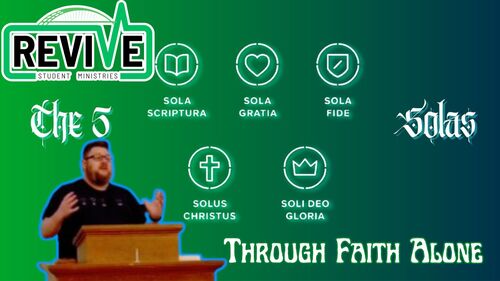
Sola Fide: Through Faith Alone
The Simplicity of Faith: Understanding Justification Through Grace Alone
There's something profoundly beautiful about a child looking up at their parent and saying, "I need you." It's a moment of pure vulnerability, an acknowledgment that despite their growing independence, there are things they simply cannot do on their own. This picture captures something essential about our relationship with God—a recognition that echoes through Scripture and church history: we cannot save ourselves.
The Foundation of Faith
At the heart of Christian theology lies a revolutionary truth that sparked the Reformation and continues to transform lives today: we are justified by grace alone through faith alone. This isn't merely theological jargon; it's the lifeblood of the gospel message.
The Apostle Paul articulated this clearly in his letter to the Ephesians: "For by grace you have been saved through faith, and that not of yourselves; it is the gift of God, not of works, lest anyone should boast. For we are His workmanship, created in Christ Jesus for good works, which God prepared beforehand that we should walk in them."
Notice the careful progression here. Salvation comes by grace—God's unmerited favor toward us. It comes through faith—our trust in what Christ has done. And it explicitly excludes our works as the means of salvation, though it includes them as the evidence and result of genuine faith.
Understanding the Terms
To grasp this truth fully, we need clarity on some important concepts:
Justification is the act of being declared righteous before God. It's not something we achieve; it's something we receive. We stand guilty before a holy God, unable to justify ourselves, but through Christ's sacrifice, we are covered by His righteousness.
Sanctification follows justification. Once we're declared righteous, God begins the work of making us holy, transforming us into the image of Christ. This is where good works come in—not as the price of admission, but as the natural outflow of a transformed life.
Glorification is the final stage when we are fully perfected in Christ's presence for eternity.
The Witness of History
What's remarkable is that this understanding isn't a modern invention or a Protestant peculiarity. The earliest Christians understood and taught these truths.
Clement of Rome, who lived during the apostolic era (35-99 AD), wrote:
"We, too, being called by His will in Christ Jesus, are not justified by ourselves, nor by our own wisdom, or understanding, or godliness, or works which we have wrought in holiness of heart, but by that faith through which, from the beginning, Almighty God has justified all men."
Jerome, who translated the Bible into Latin in the fourth century, stated plainly:
"When an ungodly man is converted, God justifies him through faith alone, not on account of good works which he possessed not."
From East to West, from the first century through the medieval period, faithful Christians recognized this truth: salvation is God's work, received through faith, not earned through human effort.
There's something profoundly beautiful about a child looking up at their parent and saying, "I need you." It's a moment of pure vulnerability, an acknowledgment that despite their growing independence, there are things they simply cannot do on their own. This picture captures something essential about our relationship with God—a recognition that echoes through Scripture and church history: we cannot save ourselves.
The Foundation of Faith
At the heart of Christian theology lies a revolutionary truth that sparked the Reformation and continues to transform lives today: we are justified by grace alone through faith alone. This isn't merely theological jargon; it's the lifeblood of the gospel message.
The Apostle Paul articulated this clearly in his letter to the Ephesians: "For by grace you have been saved through faith, and that not of yourselves; it is the gift of God, not of works, lest anyone should boast. For we are His workmanship, created in Christ Jesus for good works, which God prepared beforehand that we should walk in them."
Notice the careful progression here. Salvation comes by grace—God's unmerited favor toward us. It comes through faith—our trust in what Christ has done. And it explicitly excludes our works as the means of salvation, though it includes them as the evidence and result of genuine faith.
Understanding the Terms
To grasp this truth fully, we need clarity on some important concepts:
Justification is the act of being declared righteous before God. It's not something we achieve; it's something we receive. We stand guilty before a holy God, unable to justify ourselves, but through Christ's sacrifice, we are covered by His righteousness.
Sanctification follows justification. Once we're declared righteous, God begins the work of making us holy, transforming us into the image of Christ. This is where good works come in—not as the price of admission, but as the natural outflow of a transformed life.
Glorification is the final stage when we are fully perfected in Christ's presence for eternity.
The Witness of History
What's remarkable is that this understanding isn't a modern invention or a Protestant peculiarity. The earliest Christians understood and taught these truths.
Clement of Rome, who lived during the apostolic era (35-99 AD), wrote:
"We, too, being called by His will in Christ Jesus, are not justified by ourselves, nor by our own wisdom, or understanding, or godliness, or works which we have wrought in holiness of heart, but by that faith through which, from the beginning, Almighty God has justified all men."
Jerome, who translated the Bible into Latin in the fourth century, stated plainly:
"When an ungodly man is converted, God justifies him through faith alone, not on account of good works which he possessed not."
From East to West, from the first century through the medieval period, faithful Christians recognized this truth: salvation is God's work, received through faith, not earned through human effort.
The Scriptural Testimony
The witness of Scripture is overwhelming. Paul wrote to the Romans: "All have sinned and fall short of the glory of God, being justified freely by His grace through the redemption that is in Christ Jesus."
He continued in Romans 4: "To him who does not work but believes on Him who justifies the ungodly, his faith is accounted for righteousness."
In Galatians, he stated emphatically: "Knowing that a man is not justified by the works of the law but by faith in Jesus Christ, even we have believed in Christ Jesus, that we might be justified by faith in Christ and not by the works of the law; for by the works of the law no flesh shall be justified."
The book of Acts shows us this principle in action. When Philip encountered the Ethiopian eunuch and explained the Scriptures concerning Jesus, the man asked, "What hinders me from being baptized?" Philip's response was simple: "If you believe with all your heart, you may." The man's confession—"I believe that Jesus Christ is the Son of God"—was sufficient.
And of course, Jesus Himself declared in John 3:16-18: "For God so loved the world that He gave His only begotten Son, that whoever believes in Him should not perish but have everlasting life... He who believes in Him is not condemned."
The Heart of the Matter
So what does faith alone actually mean? It means placing your complete trust in Christ and His finished work on the cross. It's recognizing that there's nothing you can bring to the table, no resume of good deeds that makes you worthy. It's the opposite of work—it's surrender.
Faith alone means that when you stand before God, your answer for why you deserve heaven has nothing to do with you and everything to do with what Christ accomplished. You can be saved by works—just not yours. Only Christ's works are sufficient.
This isn't license to live carelessly. Rather, it's the foundation for genuine transformation. When we truly grasp that we're saved entirely by grace through faith, it doesn't lead to complacency—it leads to gratitude. And gratitude is the most powerful motivator for holy living.
We don't work for our salvation; we work because of our salvation. The good works God prepared beforehand for us to walk in aren't the path to justification—they're the proof of it.
The Humility to Receive
Perhaps the hardest part of this message is its simplicity. We want to contribute something, to feel like we've earned our place. But the gospel requires us to come empty-handed, acknowledging our complete inability to save ourselves.
Like a child saying, "I need you," we must recognize that we truly cannot do this on our own. We need God. We need His mercy—being spared the judgment we deserve. We need His grace—receiving the eternal life we could never earn.
This is the beauty of justification by grace alone through faith alone. It strips away all pretense, all pride, all self-reliance. It forces us to look at the cross and say, "That's my only hope. Christ is my only righteousness."
Living in Light of Grace
When we understand that our standing before God depends entirely on Christ's finished work, it transforms everything. We're freed from the exhausting treadmill of trying to earn God's favor. We can rest in His love, secure in our salvation, and serve Him out of joy rather than fear.
This truth should lead us to worship—to stand in awe of how good, how beautiful, how loving, how merciful, and how gracious God is. And it should compel us to live differently, not to maintain our salvation, but to express our gratitude for it.
The message is clear: salvation is God's gift, received through faith in Christ alone. Nothing more is required. Nothing less will do. And in that simple, profound truth lies the power to transform lives and secure our eternal destiny
The witness of Scripture is overwhelming. Paul wrote to the Romans: "All have sinned and fall short of the glory of God, being justified freely by His grace through the redemption that is in Christ Jesus."
He continued in Romans 4: "To him who does not work but believes on Him who justifies the ungodly, his faith is accounted for righteousness."
In Galatians, he stated emphatically: "Knowing that a man is not justified by the works of the law but by faith in Jesus Christ, even we have believed in Christ Jesus, that we might be justified by faith in Christ and not by the works of the law; for by the works of the law no flesh shall be justified."
The book of Acts shows us this principle in action. When Philip encountered the Ethiopian eunuch and explained the Scriptures concerning Jesus, the man asked, "What hinders me from being baptized?" Philip's response was simple: "If you believe with all your heart, you may." The man's confession—"I believe that Jesus Christ is the Son of God"—was sufficient.
And of course, Jesus Himself declared in John 3:16-18: "For God so loved the world that He gave His only begotten Son, that whoever believes in Him should not perish but have everlasting life... He who believes in Him is not condemned."
The Heart of the Matter
So what does faith alone actually mean? It means placing your complete trust in Christ and His finished work on the cross. It's recognizing that there's nothing you can bring to the table, no resume of good deeds that makes you worthy. It's the opposite of work—it's surrender.
Faith alone means that when you stand before God, your answer for why you deserve heaven has nothing to do with you and everything to do with what Christ accomplished. You can be saved by works—just not yours. Only Christ's works are sufficient.
This isn't license to live carelessly. Rather, it's the foundation for genuine transformation. When we truly grasp that we're saved entirely by grace through faith, it doesn't lead to complacency—it leads to gratitude. And gratitude is the most powerful motivator for holy living.
We don't work for our salvation; we work because of our salvation. The good works God prepared beforehand for us to walk in aren't the path to justification—they're the proof of it.
The Humility to Receive
Perhaps the hardest part of this message is its simplicity. We want to contribute something, to feel like we've earned our place. But the gospel requires us to come empty-handed, acknowledging our complete inability to save ourselves.
Like a child saying, "I need you," we must recognize that we truly cannot do this on our own. We need God. We need His mercy—being spared the judgment we deserve. We need His grace—receiving the eternal life we could never earn.
This is the beauty of justification by grace alone through faith alone. It strips away all pretense, all pride, all self-reliance. It forces us to look at the cross and say, "That's my only hope. Christ is my only righteousness."
Living in Light of Grace
When we understand that our standing before God depends entirely on Christ's finished work, it transforms everything. We're freed from the exhausting treadmill of trying to earn God's favor. We can rest in His love, secure in our salvation, and serve Him out of joy rather than fear.
This truth should lead us to worship—to stand in awe of how good, how beautiful, how loving, how merciful, and how gracious God is. And it should compel us to live differently, not to maintain our salvation, but to express our gratitude for it.
The message is clear: salvation is God's gift, received through faith in Christ alone. Nothing more is required. Nothing less will do. And in that simple, profound truth lies the power to transform lives and secure our eternal destiny
Recent
Archive
2026
January
February
March
June
2025
November
1 Kings 18: Showdown on Mt. CarmelOccupy Till He Comes, Daniel 12The Book of Ezra; And Billy GrahamGog and Magog invasion: Ezekiel 38 & 39October 31stFinding the Mission through Despair: 1 Kings 19The Trinity and VictoryNehemiah: Building for God and the Arrival of MessiahThe Eternal Mystery: Understanding the Nature of GodWicked Royalty, Faithful Citizen, a Vineyard, and a ProphetFor Such a Time as ThisThe Millennial TempleRepentance is Necessary: 2 Kings 1
Categories
no categories
No Comments