
Finding the Mission through Despair: 1 Kings 19
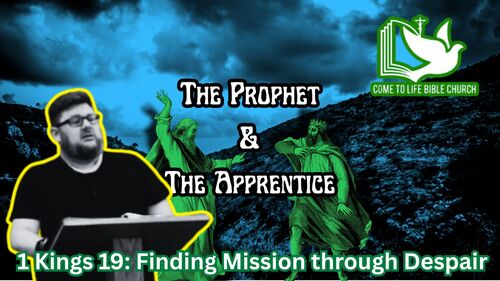
When Victory Leads to Despair: Finding God in the Quiet Moments
Have you ever experienced a spiritual high only to find yourself in the depths of despair shortly after? Perhaps you witnessed God move powerfully in your life, saw prayers answered, or experienced breakthrough—only to face crushing disappointment days or even hours later. If so, you're in good company with one of the Bible's greatest prophets.
The Aftermath of Victory
In 1 Kings 19, we find Elijah in a cave, running for his life. This seems absurd when you consider what just happened in the previous chapter. Elijah had stood alone against 850 false prophets on Mount Carmel. He challenged them to call down fire from their gods while he would call on Yahweh. The false prophets failed spectacularly, but when Elijah prayed, God sent fire that consumed not only the sacrifice but also the water-drenched altar itself. The people of Israel witnessed this miracle and turned their hearts back to God, declaring, "The Lord, He is God!"
It was an undeniable victory—a spiritual mountaintop experience if there ever was one.
Yet immediately after this triumph, Elijah receives a threatening letter from Queen Jezebel promising to kill him within 24 hours. And what does this mighty prophet do? He runs. He leaves his servants behind and flees into the wilderness, eventually collapsing under a broom tree and praying for death.
Wait—what happened? How does someone go from defeating 850 prophets with the king and his army watching to running from a single threatening letter?
The Problem of Shifting Focus
The answer lies in where Elijah's focus had shifted. On Mount Carmel, he was on mission. He had a clear objective from God and was driving toward it with courage and faith. But afterward, once the spiritual high faded, he didn't have another directive. His mind wandered back to worldly concerns, and when it did, he became afraid of worldly threats.
This is the danger we all face: when we take our eyes off the mission God has given us and focus instead on ourselves, despair creeps in.
Following God will always lead to results that are good—the results God wants. But because we're human, our desires don't always align with God's. When we don't get what we think God ought to give us, when the outcome doesn't match our expectations, we can fall into judgment and despair. We forget that what God wants is infinitely better than what we want.
The Complaint of the Self-Focused
In the cave, God asks Elijah a profound question: "What are you doing here?"
It's a question worth asking ourselves. What are we doing here—in this church, this community, this world? What has God called us to?
But Elijah doesn't answer the question. Instead, he complains: "I have been very zealous for the Lord God of hosts, but the children of Israel have forsaken Your covenant, torn down Your altars, and killed Your prophets with the sword. I alone am left, and they seek to take my life."
Notice the shift? Elijah points the finger outward, complaining about everyone else while painting himself as the lone faithful servant. But he's objectively wrong. In the previous chapter, he learned that Obadiah had hidden 100 prophets of God in caves to protect them. Elijah isn't alone—he just feels alone because his focus has turned inward.
When we become self-focused, we lose perspective. We forget the bigger picture and start asking, "What about me?"
God in the Unexpected Places
God responds to Elijah's despair in a fascinating way. He tells him to stand at the entrance of the cave because the Lord is about to pass by. Then comes a powerful wind that tears the mountains—but God isn't in the wind. An earthquake follows—but God isn't in the earthquake. Fire blazes—but God isn't in the fire.
Then comes a still, small voice. And there, in the quiet whisper, Elijah encounters God.
This is significant because in the previous chapter, God was in the fire. He's also appeared in fire before—leading the Israelites through the wilderness as a pillar of fire by night. God absolutely works in powerful, dramatic ways sometimes. But not always.
The lesson? Don't put God in a box. Don't expect Him to always show up the way you want Him to. Sometimes, especially in seasons of despair, we need to be still and know that He is God. We need to quiet the noise, stop looking for Him in the chaos, and listen for His voice in the silence.
Psalm 46:10 reminds us: "Be still, and know that I am God."
Getting Back on Mission
God asks Elijah again: "What are you doing here?" And Elijah gives the same self-focused answer. So God responds by giving him a new mission—actually, a lifelong mission that extends beyond Elijah's lifetime.
God tells him to anoint Hazael as king over Syria, Jehu as king over Israel, and Elisha as prophet to succeed him. These actions would set in motion events that Elijah himself would never see fully realized. The evil reign of Ahab and Jezebel wouldn't end in Elijah's lifetime, but his obedience would plant seeds that would bear fruit in the next generation.
This is crucial: the work of God extends beyond us. It goes beyond our generation and continues to move forward. We must prepare the field for what God will do, whether or not we're there to see it. We must pass the mission on to the next generation.
When Elijah finds Elisha plowing fields with twelve pairs of oxen (indicating he came from wealth), he throws his mantle over him—a symbolic act of calling him to ministry. Elisha asks to say goodbye to his parents first, but Elijah challenges him: "Go back again, for what have I done to you?" In other words, count the cost of delaying.
Elisha's response is remarkable. He doesn't go home. Instead, he takes the yoke of oxen and the plow—the instruments of his old life—and burns them. He uses them to cook a farewell meal, then follows Elijah without looking back.
This is true repentance: destroying the tools of your old life to fully embrace the new one God is calling you to.
The Path Forward
So how do we climb out of despair when it threatens to overwhelm us?
First, we need to get back on mission. When we're focused on what God has called us to do rather than on ourselves, we find purpose and direction.
Second, we need encouragement. God reminds Elijah that he's not alone—there are 7,000 in Israel who haven't bowed to Baal. Don't let culture silence you. You're part of a faithful remnant.
Third, we need accountability and community. Doing ministry alone makes despair easier. Having someone to walk through life with—whether a spouse, friend, or ministry partner—provides the support we need.
Finally, we must remember that the mission is bigger than us. If it's not, then it's our mission, not God's. To God alone be the glory.
When victory turns to despair, when the spiritual high fades and reality crashes in, remember: God meets us in our lowest moments. He provides strength for the journey. He speaks in the quiet when it's hardest to hear. And He gives us mission, encouragement, and community to carry us forward.
The question remains: What are you doing here? And are you ready to answer?
Have you ever experienced a spiritual high only to find yourself in the depths of despair shortly after? Perhaps you witnessed God move powerfully in your life, saw prayers answered, or experienced breakthrough—only to face crushing disappointment days or even hours later. If so, you're in good company with one of the Bible's greatest prophets.
The Aftermath of Victory
In 1 Kings 19, we find Elijah in a cave, running for his life. This seems absurd when you consider what just happened in the previous chapter. Elijah had stood alone against 850 false prophets on Mount Carmel. He challenged them to call down fire from their gods while he would call on Yahweh. The false prophets failed spectacularly, but when Elijah prayed, God sent fire that consumed not only the sacrifice but also the water-drenched altar itself. The people of Israel witnessed this miracle and turned their hearts back to God, declaring, "The Lord, He is God!"
It was an undeniable victory—a spiritual mountaintop experience if there ever was one.
Yet immediately after this triumph, Elijah receives a threatening letter from Queen Jezebel promising to kill him within 24 hours. And what does this mighty prophet do? He runs. He leaves his servants behind and flees into the wilderness, eventually collapsing under a broom tree and praying for death.
Wait—what happened? How does someone go from defeating 850 prophets with the king and his army watching to running from a single threatening letter?
The Problem of Shifting Focus
The answer lies in where Elijah's focus had shifted. On Mount Carmel, he was on mission. He had a clear objective from God and was driving toward it with courage and faith. But afterward, once the spiritual high faded, he didn't have another directive. His mind wandered back to worldly concerns, and when it did, he became afraid of worldly threats.
This is the danger we all face: when we take our eyes off the mission God has given us and focus instead on ourselves, despair creeps in.
Following God will always lead to results that are good—the results God wants. But because we're human, our desires don't always align with God's. When we don't get what we think God ought to give us, when the outcome doesn't match our expectations, we can fall into judgment and despair. We forget that what God wants is infinitely better than what we want.
The Complaint of the Self-Focused
In the cave, God asks Elijah a profound question: "What are you doing here?"
It's a question worth asking ourselves. What are we doing here—in this church, this community, this world? What has God called us to?
But Elijah doesn't answer the question. Instead, he complains: "I have been very zealous for the Lord God of hosts, but the children of Israel have forsaken Your covenant, torn down Your altars, and killed Your prophets with the sword. I alone am left, and they seek to take my life."
Notice the shift? Elijah points the finger outward, complaining about everyone else while painting himself as the lone faithful servant. But he's objectively wrong. In the previous chapter, he learned that Obadiah had hidden 100 prophets of God in caves to protect them. Elijah isn't alone—he just feels alone because his focus has turned inward.
When we become self-focused, we lose perspective. We forget the bigger picture and start asking, "What about me?"
God in the Unexpected Places
God responds to Elijah's despair in a fascinating way. He tells him to stand at the entrance of the cave because the Lord is about to pass by. Then comes a powerful wind that tears the mountains—but God isn't in the wind. An earthquake follows—but God isn't in the earthquake. Fire blazes—but God isn't in the fire.
Then comes a still, small voice. And there, in the quiet whisper, Elijah encounters God.
This is significant because in the previous chapter, God was in the fire. He's also appeared in fire before—leading the Israelites through the wilderness as a pillar of fire by night. God absolutely works in powerful, dramatic ways sometimes. But not always.
The lesson? Don't put God in a box. Don't expect Him to always show up the way you want Him to. Sometimes, especially in seasons of despair, we need to be still and know that He is God. We need to quiet the noise, stop looking for Him in the chaos, and listen for His voice in the silence.
Psalm 46:10 reminds us: "Be still, and know that I am God."
Getting Back on Mission
God asks Elijah again: "What are you doing here?" And Elijah gives the same self-focused answer. So God responds by giving him a new mission—actually, a lifelong mission that extends beyond Elijah's lifetime.
God tells him to anoint Hazael as king over Syria, Jehu as king over Israel, and Elisha as prophet to succeed him. These actions would set in motion events that Elijah himself would never see fully realized. The evil reign of Ahab and Jezebel wouldn't end in Elijah's lifetime, but his obedience would plant seeds that would bear fruit in the next generation.
This is crucial: the work of God extends beyond us. It goes beyond our generation and continues to move forward. We must prepare the field for what God will do, whether or not we're there to see it. We must pass the mission on to the next generation.
When Elijah finds Elisha plowing fields with twelve pairs of oxen (indicating he came from wealth), he throws his mantle over him—a symbolic act of calling him to ministry. Elisha asks to say goodbye to his parents first, but Elijah challenges him: "Go back again, for what have I done to you?" In other words, count the cost of delaying.
Elisha's response is remarkable. He doesn't go home. Instead, he takes the yoke of oxen and the plow—the instruments of his old life—and burns them. He uses them to cook a farewell meal, then follows Elijah without looking back.
This is true repentance: destroying the tools of your old life to fully embrace the new one God is calling you to.
The Path Forward
So how do we climb out of despair when it threatens to overwhelm us?
First, we need to get back on mission. When we're focused on what God has called us to do rather than on ourselves, we find purpose and direction.
Second, we need encouragement. God reminds Elijah that he's not alone—there are 7,000 in Israel who haven't bowed to Baal. Don't let culture silence you. You're part of a faithful remnant.
Third, we need accountability and community. Doing ministry alone makes despair easier. Having someone to walk through life with—whether a spouse, friend, or ministry partner—provides the support we need.
Finally, we must remember that the mission is bigger than us. If it's not, then it's our mission, not God's. To God alone be the glory.
When victory turns to despair, when the spiritual high fades and reality crashes in, remember: God meets us in our lowest moments. He provides strength for the journey. He speaks in the quiet when it's hardest to hear. And He gives us mission, encouragement, and community to carry us forward.
The question remains: What are you doing here? And are you ready to answer?
Recent
Archive
2026
January
February
March
June
2025
November
1 Kings 18: Showdown on Mt. CarmelOccupy Till He Comes, Daniel 12The Book of Ezra; And Billy GrahamGog and Magog invasion: Ezekiel 38 & 39October 31stFinding the Mission through Despair: 1 Kings 19The Trinity and VictoryNehemiah: Building for God and the Arrival of MessiahThe Eternal Mystery: Understanding the Nature of GodWicked Royalty, Faithful Citizen, a Vineyard, and a ProphetFor Such a Time as ThisThe Millennial TempleRepentance is Necessary: 2 Kings 1
Categories
no categories
No Comments