
The Truth on Trial
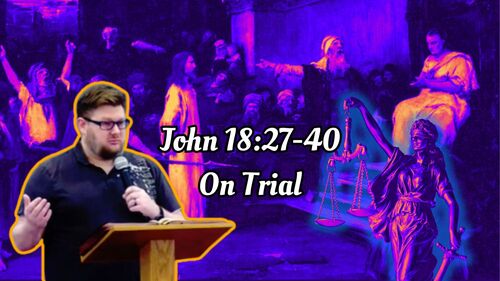
When Truth Stands on Trial: The Political Intrigue Behind the Cross
In a world obsessed with power, politics, and positioning, truth itself can stand right in front of us—and we still might miss it entirely.
The trials of Jesus reveal something profound about human nature: when we're consumed by our own systems, agendas, and ambitions, we become blind to the very thing we claim to be seeking. The question "What is truth?" echoes through history not as genuine inquiry, but as the tragic admission of someone who has lost the ability to recognize it.
The Tangled Web of First-Century Politics
To understand what happened during those final hours before the crucifixion, we need to grasp the extraordinary political complexity of first-century Judea. This wasn't a simple story of religious leaders versus an innocent man. It was a masterclass in political maneuvering, family betrayal, and the corrupting influence of power.
Picture this: Annas was the rightful high priest according to Jewish law, descended from the proper lineage and holding the legitimate claim to the office. But Rome didn't like him. So they removed him—unlawfully by Jewish standards, but entirely within their power—and installed Caiaphas instead.
Here's where it gets interesting: Caiaphas was Annas's son-in-law. A family member willing to work with Rome, driven by ambition to take the position from his own father-in-law. The people still viewed Annas as their true high priest, yet Caiaphas held the actual office, serving as Rome's puppet to maintain peace.
Then there was Herod—an Idumaean, a distant relative of the Jewish people who had converted to Judaism (whether genuinely or not remains questionable) to position himself as a mediator between Jerusalem and Rome. His entire identity was built on political expedience.
And finally, Pontius Pilate, the Roman procurator governing Judea, possibly appointed to his position through his wife's connections to Caesar, desperately trying to maintain order in a volatile region he barely understood.
When Everyone Agrees on the Wrong Thing
What's remarkable about the trial of Jesus is that for once, all these competing powers found common ground. The rightful high priest and the illegitimate one. The Jewish authorities and the Roman governor. The religious establishment and the political machine. They all agreed: Jesus had to go.
But their agreement wasn't based on truth. It was based on fear—fear of losing power, fear of losing control, fear of what this carpenter from Nazareth represented to their carefully constructed systems.
When they brought Jesus before Pilate, the conversation reveals everything wrong with human justice divorced from divine truth. Pilate asked the most basic question any judge should ask: "What accusation do you bring against this man?"
Their answer? "If he were not an evildoer, we would not have delivered him up to you."
Think about that response. It's the logic people use to avoid jury duty: "Well, he wouldn't have been arrested if he didn't do something wrong, right?" It's the abandonment of "innocent until proven guilty." It's the assumption that accusation equals guilt.
Pilate saw through it immediately. He essentially told them: "You judge him by your own law then."
But they had an agenda. "It is not lawful for us to put anyone to death," they replied.
The Irony of Fulfilled Prophecy
Here's what's extraordinary: in their cowardice, in their political maneuvering, in their attempts to avoid responsibility while still accomplishing their goal, they were actually fulfilling ancient prophecies. Isaiah 53 had predicted the scourging. Psalm 22 had described crucifixion in incredible detail—written centuries before crucifixion was even invented as a form of execution.
The Jews could have stoned Jesus themselves. They'd tried before. They'd stoned Stephen later. They'd stone Paul and leave him for dead. But in this moment, they wanted Rome to do it. They wanted to avoid the backlash from Jesus's followers while still eliminating the threat he posed to their power.
And in doing so, they gave Jesus exactly what the scriptures predicted. Even at his weakest moment, he was fully in control.
The King Who Committed No Treason
The charge against Jesus was essentially treason—claiming to be king in place of Caesar. The irony cuts deep: Jesus was on trial for the very sin we all commit. We want to sit on the throne of our own lives. We want to be the moral arbiters of our own truth. We want to determine good and evil for ourselves.
This was the original sin in Eden. The serpent's promise: "You will be like God, knowing good and evil." Translation: "You get to be the judge."
But there's only one true God, and we've all committed treason against him.
When Pilate asked, "Are you the king of the Jews?" Jesus's answer was profound: "My kingdom is not of this world. If my kingdom were of this world, my servants would fight."
He wasn't denying his kingship. He was clarifying its nature. His kingdom doesn't operate by the rules of human political systems. It doesn't rely on military might or political alliances or family connections or ambition.
What Is Truth?
After Jesus declared, "Everyone who is of the truth hears my voice," Pilate asked perhaps the most haunting question in all of scripture: "What is truth?"
And then, without waiting for an answer, he walked away.
That's what happens when we place all our hope in human systems. When we trust in political movements, family connections, religious positions, or personal ambition to save us, we lose the ability to recognize truth even when it's standing right in front of us.
Pilate examined Jesus and concluded, "I find no fault in him at all." He could see objectively that Jesus was innocent. But he was too much of a coward to act on that truth. Instead, he tried to manipulate the crowd, offering them a choice between Jesus and Barabbas—a known criminal.
Surely they'd choose to release the innocent man, right?
They chose Barabbas.
The Ultimate Exchange
There's something beautifully symbolic in that choice. Barabbas's full name was Jesus Barabbas. "Barabbas" means "son of the father"—essentially, "son of a regular human father." Just a normal guy. One of us.
The Son of God was traded for the son of humans.
The innocent one died so the guilty could go free.
This wasn't just what happened that day in Jerusalem. It's the pattern of all redemption. The King of Kings, who committed no treason, died for those of us who have all rebelled against God. He took our place. He paid our debt.
Where We Place Our Hope
We live in a time when politics has become pop culture, when human systems dominate our conversations and consume our energy. There's nothing wrong with being involved, with hoping for just governance, with wanting our freedoms protected.
But when our ultimate hope rests in political movements rather than in Christ, we've missed the point entirely. Every human system will eventually crumble. Every political alliance will eventually fail. Every ambitious leader will eventually disappoint.
But the King of Kings never fails.
Truth stood firm in that courtroom two thousand years ago. Truth won, even though it looked like defeat. Scripture was fulfilled. The plan of redemption moved forward exactly as predicted.
And three days later, that same Truth walked out of a tomb, having defeated death itself.
That's where our hope belongs—not in the systems of this world, but in the One who created the world and will one day return to rule it in perfect justice and truth.
The question isn't whether we'll recognize truth when we see it. The question is whether we're listening for the voice of the Good Shepherd, who knows his sheep and calls them by name.
In a world obsessed with power, politics, and positioning, truth itself can stand right in front of us—and we still might miss it entirely.
The trials of Jesus reveal something profound about human nature: when we're consumed by our own systems, agendas, and ambitions, we become blind to the very thing we claim to be seeking. The question "What is truth?" echoes through history not as genuine inquiry, but as the tragic admission of someone who has lost the ability to recognize it.
The Tangled Web of First-Century Politics
To understand what happened during those final hours before the crucifixion, we need to grasp the extraordinary political complexity of first-century Judea. This wasn't a simple story of religious leaders versus an innocent man. It was a masterclass in political maneuvering, family betrayal, and the corrupting influence of power.
Picture this: Annas was the rightful high priest according to Jewish law, descended from the proper lineage and holding the legitimate claim to the office. But Rome didn't like him. So they removed him—unlawfully by Jewish standards, but entirely within their power—and installed Caiaphas instead.
Here's where it gets interesting: Caiaphas was Annas's son-in-law. A family member willing to work with Rome, driven by ambition to take the position from his own father-in-law. The people still viewed Annas as their true high priest, yet Caiaphas held the actual office, serving as Rome's puppet to maintain peace.
Then there was Herod—an Idumaean, a distant relative of the Jewish people who had converted to Judaism (whether genuinely or not remains questionable) to position himself as a mediator between Jerusalem and Rome. His entire identity was built on political expedience.
And finally, Pontius Pilate, the Roman procurator governing Judea, possibly appointed to his position through his wife's connections to Caesar, desperately trying to maintain order in a volatile region he barely understood.
When Everyone Agrees on the Wrong Thing
What's remarkable about the trial of Jesus is that for once, all these competing powers found common ground. The rightful high priest and the illegitimate one. The Jewish authorities and the Roman governor. The religious establishment and the political machine. They all agreed: Jesus had to go.
But their agreement wasn't based on truth. It was based on fear—fear of losing power, fear of losing control, fear of what this carpenter from Nazareth represented to their carefully constructed systems.
When they brought Jesus before Pilate, the conversation reveals everything wrong with human justice divorced from divine truth. Pilate asked the most basic question any judge should ask: "What accusation do you bring against this man?"
Their answer? "If he were not an evildoer, we would not have delivered him up to you."
Think about that response. It's the logic people use to avoid jury duty: "Well, he wouldn't have been arrested if he didn't do something wrong, right?" It's the abandonment of "innocent until proven guilty." It's the assumption that accusation equals guilt.
Pilate saw through it immediately. He essentially told them: "You judge him by your own law then."
But they had an agenda. "It is not lawful for us to put anyone to death," they replied.
The Irony of Fulfilled Prophecy
Here's what's extraordinary: in their cowardice, in their political maneuvering, in their attempts to avoid responsibility while still accomplishing their goal, they were actually fulfilling ancient prophecies. Isaiah 53 had predicted the scourging. Psalm 22 had described crucifixion in incredible detail—written centuries before crucifixion was even invented as a form of execution.
The Jews could have stoned Jesus themselves. They'd tried before. They'd stoned Stephen later. They'd stone Paul and leave him for dead. But in this moment, they wanted Rome to do it. They wanted to avoid the backlash from Jesus's followers while still eliminating the threat he posed to their power.
And in doing so, they gave Jesus exactly what the scriptures predicted. Even at his weakest moment, he was fully in control.
The King Who Committed No Treason
The charge against Jesus was essentially treason—claiming to be king in place of Caesar. The irony cuts deep: Jesus was on trial for the very sin we all commit. We want to sit on the throne of our own lives. We want to be the moral arbiters of our own truth. We want to determine good and evil for ourselves.
This was the original sin in Eden. The serpent's promise: "You will be like God, knowing good and evil." Translation: "You get to be the judge."
But there's only one true God, and we've all committed treason against him.
When Pilate asked, "Are you the king of the Jews?" Jesus's answer was profound: "My kingdom is not of this world. If my kingdom were of this world, my servants would fight."
He wasn't denying his kingship. He was clarifying its nature. His kingdom doesn't operate by the rules of human political systems. It doesn't rely on military might or political alliances or family connections or ambition.
What Is Truth?
After Jesus declared, "Everyone who is of the truth hears my voice," Pilate asked perhaps the most haunting question in all of scripture: "What is truth?"
And then, without waiting for an answer, he walked away.
That's what happens when we place all our hope in human systems. When we trust in political movements, family connections, religious positions, or personal ambition to save us, we lose the ability to recognize truth even when it's standing right in front of us.
Pilate examined Jesus and concluded, "I find no fault in him at all." He could see objectively that Jesus was innocent. But he was too much of a coward to act on that truth. Instead, he tried to manipulate the crowd, offering them a choice between Jesus and Barabbas—a known criminal.
Surely they'd choose to release the innocent man, right?
They chose Barabbas.
The Ultimate Exchange
There's something beautifully symbolic in that choice. Barabbas's full name was Jesus Barabbas. "Barabbas" means "son of the father"—essentially, "son of a regular human father." Just a normal guy. One of us.
The Son of God was traded for the son of humans.
The innocent one died so the guilty could go free.
This wasn't just what happened that day in Jerusalem. It's the pattern of all redemption. The King of Kings, who committed no treason, died for those of us who have all rebelled against God. He took our place. He paid our debt.
Where We Place Our Hope
We live in a time when politics has become pop culture, when human systems dominate our conversations and consume our energy. There's nothing wrong with being involved, with hoping for just governance, with wanting our freedoms protected.
But when our ultimate hope rests in political movements rather than in Christ, we've missed the point entirely. Every human system will eventually crumble. Every political alliance will eventually fail. Every ambitious leader will eventually disappoint.
But the King of Kings never fails.
Truth stood firm in that courtroom two thousand years ago. Truth won, even though it looked like defeat. Scripture was fulfilled. The plan of redemption moved forward exactly as predicted.
And three days later, that same Truth walked out of a tomb, having defeated death itself.
That's where our hope belongs—not in the systems of this world, but in the One who created the world and will one day return to rule it in perfect justice and truth.
The question isn't whether we'll recognize truth when we see it. The question is whether we're listening for the voice of the Good Shepherd, who knows his sheep and calls them by name.
Recent
Archive
2026
January
February
March
June
2025
November
1 Kings 18: Showdown on Mt. CarmelOccupy Till He Comes, Daniel 12The Book of Ezra; And Billy GrahamGog and Magog invasion: Ezekiel 38 & 39October 31stFinding the Mission through Despair: 1 Kings 19The Trinity and VictoryNehemiah: Building for God and the Arrival of MessiahThe Eternal Mystery: Understanding the Nature of GodWicked Royalty, Faithful Citizen, a Vineyard, and a ProphetFor Such a Time as ThisThe Millennial TempleRepentance is Necessary: 2 Kings 1
Categories
no categories
No Comments