Solus Christus: In Christ Alone
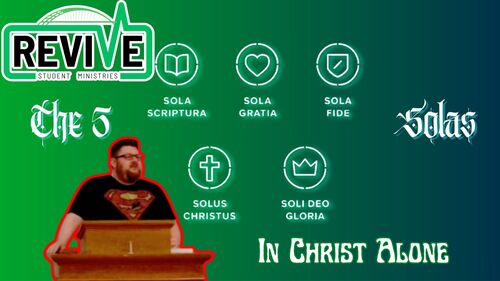
The Simplicity of Salvation: In Christ Alone
There's something profoundly beautiful about simplicity. In a world that constantly complicates faith with requirements, rituals, and religious hoops to jump through, the gospel message remains stunningly straightforward: salvation comes through Christ alone.
This truth wasn't always celebrated in church history. In fact, it became so obscured over centuries that it required a Reformation to bring it back into focus. The concept of solus Christus—in Christ alone—became one of the five pillars of the Protestant Reformation, not because it was a new idea, but because it was a forgotten one.
The Early Church Understood
The early church fathers grasped this truth with clarity. Justin Martyr, writing in the second century, explained that all the sacrificial lambs offered throughout Jewish history couldn't actually remove sins. They were merely shadows pointing to the true Lamb, Jesus Christ, who would be offered as a sacrifice once for all.
John Chrysostom, one of the most influential fathers of the Eastern church tradition, provided profound insight when commenting on 1 Timothy 2:5: "For there is one God and one mediator between God and men, the man Christ Jesus." Chrysostom pointed out that the mediator must possess both natures—fully God and fully man—to bridge the gap between humanity and divinity. Jesus alone fits this description.
What makes Chrysostom's observation particularly powerful is his conclusion: a mere man could never serve as mediator because every human being must themselves plead with God. We all need salvation. We all need grace. How could any of us possibly stand between God and another person when we ourselves are desperate for reconciliation?
There's something profoundly beautiful about simplicity. In a world that constantly complicates faith with requirements, rituals, and religious hoops to jump through, the gospel message remains stunningly straightforward: salvation comes through Christ alone.
This truth wasn't always celebrated in church history. In fact, it became so obscured over centuries that it required a Reformation to bring it back into focus. The concept of solus Christus—in Christ alone—became one of the five pillars of the Protestant Reformation, not because it was a new idea, but because it was a forgotten one.
The Early Church Understood
The early church fathers grasped this truth with clarity. Justin Martyr, writing in the second century, explained that all the sacrificial lambs offered throughout Jewish history couldn't actually remove sins. They were merely shadows pointing to the true Lamb, Jesus Christ, who would be offered as a sacrifice once for all.
John Chrysostom, one of the most influential fathers of the Eastern church tradition, provided profound insight when commenting on 1 Timothy 2:5: "For there is one God and one mediator between God and men, the man Christ Jesus." Chrysostom pointed out that the mediator must possess both natures—fully God and fully man—to bridge the gap between humanity and divinity. Jesus alone fits this description.
What makes Chrysostom's observation particularly powerful is his conclusion: a mere man could never serve as mediator because every human being must themselves plead with God. We all need salvation. We all need grace. How could any of us possibly stand between God and another person when we ourselves are desperate for reconciliation?
The Shepherd and His Sheep
Jesus himself painted a vivid picture of this exclusive path to salvation in John 10. Using imagery familiar to his agrarian audience, he described himself as both the Good Shepherd and the door to the sheep pen.
In ancient shepherding practices, multiple flocks would sometimes graze together. When it came time to separate them, shepherds would call out, and remarkably, the sheep would recognize their own shepherd's voice. They wouldn't follow a stranger. They knew who belonged to them and who they belonged to.
Jesus declared, "My sheep hear my voice, and I know them, and they follow me." This wasn't just poetic language—it was a profound spiritual truth. Those who belong to Christ recognize his voice. They respond to his call. They follow him, not because of religious obligation, but because of spiritual recognition.
But Jesus didn't stop with the shepherd imagery. He also identified himself as the door: "I am the door. If anyone enters by me, he will be saved and will go in and out and find pasture."
In rural settings, shepherds would literally become the doorway to the sheep pen at night. After gathering the flock inside a makeshift enclosure, the shepherd would lie down across the opening. The sheep couldn't leave without crossing over him, and predators couldn't enter without going through him first.
What a picture of salvation! Christ positions himself between us and danger. He lays down his life to protect us. He is simultaneously our access to safety and our protection from the enemy. There is no other way in, and there's no safer place to be.
One Flock, One Shepherd
Jesus made another crucial point in this passage: "And other sheep I have which are not of this fold; them also I must bring, and they will hear my voice; and there will be one flock and one shepherd."
Speaking to a Jewish audience steeped in ethnic and religious exclusivity, Jesus announced that Gentiles would also be brought into the fold. This wasn't a popular message, but it was a necessary one. Salvation through Christ alone meant salvation available to all people, regardless of their background.
This promise found dramatic fulfillment in Acts 10, when Peter preached the gospel to Cornelius and his household—Gentiles who were hungry for God. As Peter spoke about Jesus, something extraordinary happened: the Holy Spirit fell upon these Gentile believers before they had been baptized, before they had completed any religious rituals, before they had proven themselves worthy by Jewish standards.
The Jewish believers who witnessed this were astonished. The gift of the Holy Spirit had been poured out on Gentiles simply because they believed the gospel message about Jesus.
Notice the order of events: they heard, they believed, they received the Holy Spirit, and then Peter baptized them. Their salvation wasn't dependent on the ritual of baptism or any other religious practice. It came through faith in Christ alone.
What Doesn't Save Us
This is where the Reformation became necessary. Over fifteen hundred years, the church had gradually added layers of requirements between people and God—indulgences, pilgrimages, elaborate rituals, clerical mediation. The simple gospel of salvation by grace through faith in Christ had been buried under religious machinery.
But here's the liberating truth: You are not saved by attending church, no matter how faithfully. You're not saved by being baptized, though baptism is an important expression of faith. You're not saved by raising your hands during worship, reading your Bible daily, praying consistently, or growing up in a Christian family.
These are all good things. Many are biblical practices that believers should embrace. But they don't save you. Only Christ saves.
The Mediator We Need
We need a mediator who is both fully God and fully human. We need someone who understands our weakness because he experienced human limitation, yet possesses divine power to actually reconcile us to God. We need someone who can stand in the gap between holy God and sinful humanity without being disqualified by either nature.
Jesus Christ is that mediator. Not the church. Not clergy. Not our own efforts or religious achievements. Christ alone.
This doesn't diminish the church or make spiritual disciplines unimportant. Rather, it puts them in proper perspective. We don't practice our faith to earn salvation; we practice our faith because we've received salvation. We don't follow Christ to become his sheep; we follow him because we are his sheep and we recognize his voice.
The Simplicity That Saves
In the end, salvation is beautifully simple: by God's grace alone, through faith alone, in Christ alone. No complications. No additional requirements. No religious ladder to climb.
The Good Shepherd has laid down his life for his sheep. He stands as the door, protecting us from the enemy and providing safe passage into relationship with God. His voice calls out, and those who belong to him recognize that voice and respond.
Have you heard his voice? Do you recognize the Shepherd who gave his life for you? The door stands open, but there is only one door. His name is Jesus.
Jesus himself painted a vivid picture of this exclusive path to salvation in John 10. Using imagery familiar to his agrarian audience, he described himself as both the Good Shepherd and the door to the sheep pen.
In ancient shepherding practices, multiple flocks would sometimes graze together. When it came time to separate them, shepherds would call out, and remarkably, the sheep would recognize their own shepherd's voice. They wouldn't follow a stranger. They knew who belonged to them and who they belonged to.
Jesus declared, "My sheep hear my voice, and I know them, and they follow me." This wasn't just poetic language—it was a profound spiritual truth. Those who belong to Christ recognize his voice. They respond to his call. They follow him, not because of religious obligation, but because of spiritual recognition.
But Jesus didn't stop with the shepherd imagery. He also identified himself as the door: "I am the door. If anyone enters by me, he will be saved and will go in and out and find pasture."
In rural settings, shepherds would literally become the doorway to the sheep pen at night. After gathering the flock inside a makeshift enclosure, the shepherd would lie down across the opening. The sheep couldn't leave without crossing over him, and predators couldn't enter without going through him first.
What a picture of salvation! Christ positions himself between us and danger. He lays down his life to protect us. He is simultaneously our access to safety and our protection from the enemy. There is no other way in, and there's no safer place to be.
One Flock, One Shepherd
Jesus made another crucial point in this passage: "And other sheep I have which are not of this fold; them also I must bring, and they will hear my voice; and there will be one flock and one shepherd."
Speaking to a Jewish audience steeped in ethnic and religious exclusivity, Jesus announced that Gentiles would also be brought into the fold. This wasn't a popular message, but it was a necessary one. Salvation through Christ alone meant salvation available to all people, regardless of their background.
This promise found dramatic fulfillment in Acts 10, when Peter preached the gospel to Cornelius and his household—Gentiles who were hungry for God. As Peter spoke about Jesus, something extraordinary happened: the Holy Spirit fell upon these Gentile believers before they had been baptized, before they had completed any religious rituals, before they had proven themselves worthy by Jewish standards.
The Jewish believers who witnessed this were astonished. The gift of the Holy Spirit had been poured out on Gentiles simply because they believed the gospel message about Jesus.
Notice the order of events: they heard, they believed, they received the Holy Spirit, and then Peter baptized them. Their salvation wasn't dependent on the ritual of baptism or any other religious practice. It came through faith in Christ alone.
What Doesn't Save Us
This is where the Reformation became necessary. Over fifteen hundred years, the church had gradually added layers of requirements between people and God—indulgences, pilgrimages, elaborate rituals, clerical mediation. The simple gospel of salvation by grace through faith in Christ had been buried under religious machinery.
But here's the liberating truth: You are not saved by attending church, no matter how faithfully. You're not saved by being baptized, though baptism is an important expression of faith. You're not saved by raising your hands during worship, reading your Bible daily, praying consistently, or growing up in a Christian family.
These are all good things. Many are biblical practices that believers should embrace. But they don't save you. Only Christ saves.
The Mediator We Need
We need a mediator who is both fully God and fully human. We need someone who understands our weakness because he experienced human limitation, yet possesses divine power to actually reconcile us to God. We need someone who can stand in the gap between holy God and sinful humanity without being disqualified by either nature.
Jesus Christ is that mediator. Not the church. Not clergy. Not our own efforts or religious achievements. Christ alone.
This doesn't diminish the church or make spiritual disciplines unimportant. Rather, it puts them in proper perspective. We don't practice our faith to earn salvation; we practice our faith because we've received salvation. We don't follow Christ to become his sheep; we follow him because we are his sheep and we recognize his voice.
The Simplicity That Saves
In the end, salvation is beautifully simple: by God's grace alone, through faith alone, in Christ alone. No complications. No additional requirements. No religious ladder to climb.
The Good Shepherd has laid down his life for his sheep. He stands as the door, protecting us from the enemy and providing safe passage into relationship with God. His voice calls out, and those who belong to him recognize that voice and respond.
Have you heard his voice? Do you recognize the Shepherd who gave his life for you? The door stands open, but there is only one door. His name is Jesus.
Recent
Archive
2026
January
February
March
June
2025
November
1 Kings 18: Showdown on Mt. CarmelOccupy Till He Comes, Daniel 12The Book of Ezra; And Billy GrahamGog and Magog invasion: Ezekiel 38 & 39October 31stFinding the Mission through Despair: 1 Kings 19The Trinity and VictoryNehemiah: Building for God and the Arrival of MessiahThe Eternal Mystery: Understanding the Nature of GodWicked Royalty, Faithful Citizen, a Vineyard, and a ProphetFor Such a Time as ThisThe Millennial TempleRepentance is Necessary: 2 Kings 1
Categories
no categories
No Comments