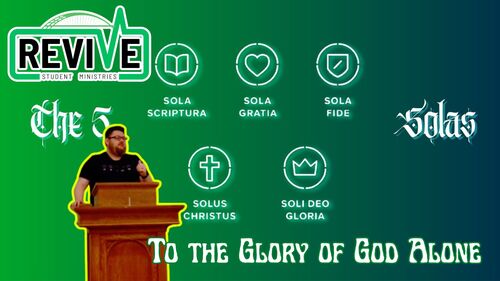
Soli Deo Gloria: To the Glory of God Alone
The Glory That Changes Everything: Why God Alone Deserves Our Worship
When we gaze at the night sky, what are we really seeing? There are billions of galaxies, each containing billions of stars. The sheer scale of the universe has led many to conclude that it seems wasteful if humanity is all there is. But what if the universe isn't about us at all?
The psalmist declared, "The heavens declare the glory of God, and the firmament shows his handiwork" (Psalm 19:1). Suddenly, the vast expanse of space makes perfect sense. If the universe exists to display God's glory, then it's exactly the right size. It would take that many stars, that many galaxies, that much incomprehensible beauty to even begin to showcase the magnitude of who God is.
Glory Written Into Creation
God's glory isn't hidden or obscure—it's shouting at us from every corner of creation. Psalm 19 continues by explaining that day after day, night after night, creation speaks without words in a language every culture can understand. The sun rises like a bridegroom, the natural world operates with precision, and deep within our souls, we recognize a standard of goodness we cannot achieve on our own.
This is where God's glory becomes deeply personal. We all carry an internal moral compass pointing toward absolute goodness, yet none of us can reach that standard. This isn't accidental. The law of God, as the psalm says, is "perfect, converting the soul." God's very perfection and holiness draw us to Him, making us aware of both His greatness and our desperate need for Him.
The psalmist concludes with a humble plea: "Let the words of my mouth and the meditation of my heart be acceptable in Your sight, O Lord, my strength and my Redeemer." Even the one entrusted by God to write Scripture recognized his own inadequacy. God's glory doesn't just inspire awe—it leads us to redemption.
Created for His Glory
In Isaiah 43, written 700 years before Christ's birth, God makes a stunning declaration: "Everyone who is called by My name, whom I have created for My glory." Our very existence has purpose woven into it—we were made to glorify God.
But the passage continues with an even more profound truth: "Before Me there was no God formed, nor shall there be after Me. I, even I, am the Lord, and besides Me there is no Savior."
God is utterly unique. He alone is uncreated, eternal, holy, and unlike anything else in existence. And here's the revolutionary truth: our salvation is His glory. When God saves us, He demonstrates His mercy, His power, His grace, and His love. The rescue of broken humanity showcases the character of God in ways nothing else could.
The Glory of Salvation
The Apostle Paul understood this deeply. Writing to the Romans, he explained that Christ became a servant to confirm God's promises and that through this, Gentiles would "glorify God for His mercy."
Our salvation isn't ultimately about us—it's about God's goodness being put on display. His grace saves us, and in being saved, we bring Him glory. It's a beautiful cycle: God's glory draws us to faith, His grace saves us, and our salvation glorifies Him further.
This is why the Protestant Reformation centered on the idea of "Soli Deo Gloria"—to God alone be the glory. Salvation belongs to Him, not to any institution, ritual, or human achievement.
When the Church Lost Its Way
For centuries, the early church understood these truths clearly. Church fathers like Augustine argued passionately that all good things come from God alone. He warned that anyone who places hope in human effort—even their own—falls under a curse, because hope belongs in God alone.
Yet over time, something went terribly wrong. By the eighth century, church councils began making declarations that directly contradicted earlier Christian teaching. The Second Council of Nicaea in 787 AD mandated that Christians must venerate religious images—bowing before them, kissing them, lighting candles, and burning incense before icons of saints and Mary.
The council didn't just recommend this practice; it declared that anyone who refused was "anathema"—cut off from God, the church, and salvation itself. They claimed this was the ancient practice of the apostles, even though no historical evidence supported this claim.
The irony is staggering. Just 33 years earlier, another council with even more bishops had completely rejected religious images. Seven years later, yet another council declared images acceptable for decoration and teaching but forbidden for worship. Both of these councils based their decisions on actual writings from the early church fathers, who universally opposed using images in worship.
Early Christian leaders like Tertullian, Clement of Alexandria, Origen, and Irenaeus either opposed images entirely or accepted them only for decoration and education—never for worship practices that resembled the idolatry Scripture condemns.
The Heart of the Matter
Why does this history matter? Because it reveals a fundamental question every person must answer: Where does authority for salvation reside?
If the church itself holds ultimate authority—even when it contradicts earlier teaching and Scripture—then salvation becomes about navigating institutional requirements. Glory goes to the institution that dispenses grace according to its rules.
But if "Soli Deo Gloria" is true, then glory belongs to God alone, and nothing should stand between us and Him. No human institution, no matter how ancient or influential, can create obstacles to God's grace.
The early apostles faced this very issue. At the Council of Jerusalem, they debated whether Gentile converts needed to follow Jewish law. Their conclusion was revolutionary: "Why do you test God by putting a yoke on the neck of the disciples which neither our fathers nor we were able to bear?" (Acts 15:10). They recognized that salvation comes through God's grace, not human achievement.
Truth That Never Changes
God is the same yesterday, today, and forever. Truth doesn't shift with the centuries or bend to institutional preferences. He is eternal, and He is truth itself.
This means our justification—our right standing before a holy God—comes entirely from Him:
When we truly grasp this, everything changes. We stop trying to earn what can only be given. We stop looking to fallible institutions for what only an infallible God can provide. We lift our eyes to the heavens that declare His glory and recognize that the same God who created billions of galaxies created us for relationship with Him.
And that is a truth worth celebrating—to the glory of God alone.
When we gaze at the night sky, what are we really seeing? There are billions of galaxies, each containing billions of stars. The sheer scale of the universe has led many to conclude that it seems wasteful if humanity is all there is. But what if the universe isn't about us at all?
The psalmist declared, "The heavens declare the glory of God, and the firmament shows his handiwork" (Psalm 19:1). Suddenly, the vast expanse of space makes perfect sense. If the universe exists to display God's glory, then it's exactly the right size. It would take that many stars, that many galaxies, that much incomprehensible beauty to even begin to showcase the magnitude of who God is.
Glory Written Into Creation
God's glory isn't hidden or obscure—it's shouting at us from every corner of creation. Psalm 19 continues by explaining that day after day, night after night, creation speaks without words in a language every culture can understand. The sun rises like a bridegroom, the natural world operates with precision, and deep within our souls, we recognize a standard of goodness we cannot achieve on our own.
This is where God's glory becomes deeply personal. We all carry an internal moral compass pointing toward absolute goodness, yet none of us can reach that standard. This isn't accidental. The law of God, as the psalm says, is "perfect, converting the soul." God's very perfection and holiness draw us to Him, making us aware of both His greatness and our desperate need for Him.
The psalmist concludes with a humble plea: "Let the words of my mouth and the meditation of my heart be acceptable in Your sight, O Lord, my strength and my Redeemer." Even the one entrusted by God to write Scripture recognized his own inadequacy. God's glory doesn't just inspire awe—it leads us to redemption.
Created for His Glory
In Isaiah 43, written 700 years before Christ's birth, God makes a stunning declaration: "Everyone who is called by My name, whom I have created for My glory." Our very existence has purpose woven into it—we were made to glorify God.
But the passage continues with an even more profound truth: "Before Me there was no God formed, nor shall there be after Me. I, even I, am the Lord, and besides Me there is no Savior."
God is utterly unique. He alone is uncreated, eternal, holy, and unlike anything else in existence. And here's the revolutionary truth: our salvation is His glory. When God saves us, He demonstrates His mercy, His power, His grace, and His love. The rescue of broken humanity showcases the character of God in ways nothing else could.
The Glory of Salvation
The Apostle Paul understood this deeply. Writing to the Romans, he explained that Christ became a servant to confirm God's promises and that through this, Gentiles would "glorify God for His mercy."
Our salvation isn't ultimately about us—it's about God's goodness being put on display. His grace saves us, and in being saved, we bring Him glory. It's a beautiful cycle: God's glory draws us to faith, His grace saves us, and our salvation glorifies Him further.
This is why the Protestant Reformation centered on the idea of "Soli Deo Gloria"—to God alone be the glory. Salvation belongs to Him, not to any institution, ritual, or human achievement.
When the Church Lost Its Way
For centuries, the early church understood these truths clearly. Church fathers like Augustine argued passionately that all good things come from God alone. He warned that anyone who places hope in human effort—even their own—falls under a curse, because hope belongs in God alone.
Yet over time, something went terribly wrong. By the eighth century, church councils began making declarations that directly contradicted earlier Christian teaching. The Second Council of Nicaea in 787 AD mandated that Christians must venerate religious images—bowing before them, kissing them, lighting candles, and burning incense before icons of saints and Mary.
The council didn't just recommend this practice; it declared that anyone who refused was "anathema"—cut off from God, the church, and salvation itself. They claimed this was the ancient practice of the apostles, even though no historical evidence supported this claim.
The irony is staggering. Just 33 years earlier, another council with even more bishops had completely rejected religious images. Seven years later, yet another council declared images acceptable for decoration and teaching but forbidden for worship. Both of these councils based their decisions on actual writings from the early church fathers, who universally opposed using images in worship.
Early Christian leaders like Tertullian, Clement of Alexandria, Origen, and Irenaeus either opposed images entirely or accepted them only for decoration and education—never for worship practices that resembled the idolatry Scripture condemns.
The Heart of the Matter
Why does this history matter? Because it reveals a fundamental question every person must answer: Where does authority for salvation reside?
If the church itself holds ultimate authority—even when it contradicts earlier teaching and Scripture—then salvation becomes about navigating institutional requirements. Glory goes to the institution that dispenses grace according to its rules.
But if "Soli Deo Gloria" is true, then glory belongs to God alone, and nothing should stand between us and Him. No human institution, no matter how ancient or influential, can create obstacles to God's grace.
The early apostles faced this very issue. At the Council of Jerusalem, they debated whether Gentile converts needed to follow Jewish law. Their conclusion was revolutionary: "Why do you test God by putting a yoke on the neck of the disciples which neither our fathers nor we were able to bear?" (Acts 15:10). They recognized that salvation comes through God's grace, not human achievement.
Truth That Never Changes
God is the same yesterday, today, and forever. Truth doesn't shift with the centuries or bend to institutional preferences. He is eternal, and He is truth itself.
This means our justification—our right standing before a holy God—comes entirely from Him:
- By grace alone (not our merit)
- Through faith alone (not our works)
- In Christ alone (not multiple mediators)
- To the glory of God alone (not shared with institutions)
- According to Scripture alone (our ultimate authority)
When we truly grasp this, everything changes. We stop trying to earn what can only be given. We stop looking to fallible institutions for what only an infallible God can provide. We lift our eyes to the heavens that declare His glory and recognize that the same God who created billions of galaxies created us for relationship with Him.
And that is a truth worth celebrating—to the glory of God alone.
Recent
Archive
2026
January
February
March
June
2025
November
1 Kings 18: Showdown on Mt. CarmelOccupy Till He Comes, Daniel 12The Book of Ezra; And Billy GrahamGog and Magog invasion: Ezekiel 38 & 39October 31stFinding the Mission through Despair: 1 Kings 19The Trinity and VictoryNehemiah: Building for God and the Arrival of MessiahThe Eternal Mystery: Understanding the Nature of GodWicked Royalty, Faithful Citizen, a Vineyard, and a ProphetFor Such a Time as ThisThe Millennial TempleRepentance is Necessary: 2 Kings 1
Categories
no categories
No Comments