
The Incarnation
The Infinite Contained: Understanding the Mystery of the Incarnation
There's something profoundly humbling about standing beneath a night sky unpolluted by city lights. When you find yourself on a mountain peak or in a remote wilderness, the stars don't just twinkle—they overwhelm. They appear close enough to touch, massive enough to swallow you whole, and the Milky Way stretches across the darkness like a luminous river reminding us of our smallness.
The Psalmist captured this experience perfectly: "The heavens declare the glory of God, and the sky above proclaims his handiwork" (Psalm 19:1). The sheer vastness of space shouts back at us the magnificence of our Creator. But the universe doesn't just declare God's glory through its size—it does so through its precision.
The Universe's Impossible Precision
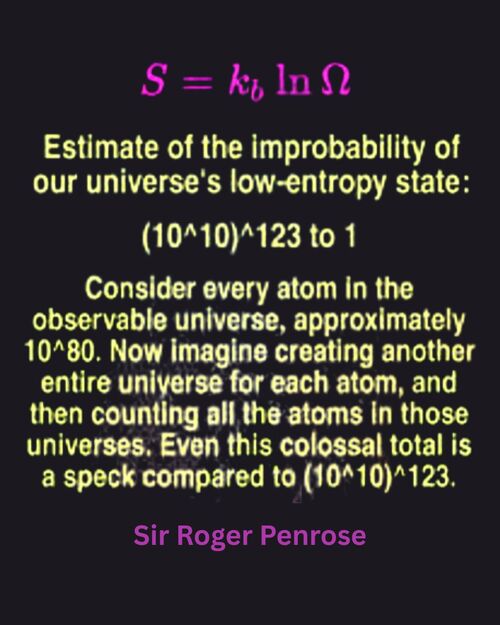
Consider this staggering reality: from the moment of the universe's inception, certain fundamental forces had to be calibrated with extraordinary precision for life to exist. The strong and weak nuclear forces, gravity, the expansion rate of the universe—all had to be set exactly right. Sir Roger Penrose, one of the world's leading mathematical physicists, calculated the odds of this fine-tuning. The number he arrived at contains more zeros than there are atoms in the entire observable universe.
Let that sink in for a moment. The probability is so astronomically small that it defies comprehension. The universe wasn't just thrown together haphazardly. It was crafted with meticulous intention, designed with purpose, calibrated with impossible precision.
This God—the one who set the stars in their courses and calibrated the fundamental forces of physics—made a choice that should arrest our attention and capture our wonder. He decided to step inside His own creation.
There's something profoundly humbling about standing beneath a night sky unpolluted by city lights. When you find yourself on a mountain peak or in a remote wilderness, the stars don't just twinkle—they overwhelm. They appear close enough to touch, massive enough to swallow you whole, and the Milky Way stretches across the darkness like a luminous river reminding us of our smallness.
The Psalmist captured this experience perfectly: "The heavens declare the glory of God, and the sky above proclaims his handiwork" (Psalm 19:1). The sheer vastness of space shouts back at us the magnificence of our Creator. But the universe doesn't just declare God's glory through its size—it does so through its precision.
The Universe's Impossible Precision
Consider this staggering reality: from the moment of the universe's inception, certain fundamental forces had to be calibrated with extraordinary precision for life to exist. The strong and weak nuclear forces, gravity, the expansion rate of the universe—all had to be set exactly right. Sir Roger Penrose, one of the world's leading mathematical physicists, calculated the odds of this fine-tuning. The number he arrived at contains more zeros than there are atoms in the entire observable universe.
Let that sink in for a moment. The probability is so astronomically small that it defies comprehension. The universe wasn't just thrown together haphazardly. It was crafted with meticulous intention, designed with purpose, calibrated with impossible precision.
This God—the one who set the stars in their courses and calibrated the fundamental forces of physics—made a choice that should arrest our attention and capture our wonder. He decided to step inside His own creation.
The Announcement That Changed Everything
The story unfolds in an unassuming place: Nazareth, a small city in Galilee. A young woman named Mary, betrothed but not yet married, was going about her ordinary life when the extraordinary interrupted.
The angel Gabriel appeared with words that would echo through eternity: "Greetings, O favored one, the Lord is with you!" (Luke 1:28).
Mary was understandably troubled. Who wouldn't be when confronted by a heavenly messenger? But Gabriel continued: "Do not be afraid, Mary, for you have found favor with God. And behold, you will conceive in your womb and bear a son, and you shall call his name Jesus. He will be great and will be called the Son of the Most High" (Luke 1:30-32).
These weren't just words of comfort to a frightened girl. They were heaven's declaration of victory over the powers of darkness. They were the announcement that the Messiah—the Son of God, the Word made flesh—was coming into the world.
The Impossible Made Possible
Mary asked the obvious question: "How will this be, since I am a virgin?"
Gabriel's answer reveals the profound mystery at the heart of Christianity: "The Holy Spirit will come upon you, and the power of the Most High will overshadow you; therefore the child to be born will be called holy—the Son of God" (Luke 1:35).
This is the moment. The eternal One stepped into time. The Creator became part of creation. The Author entered physically into His own story.
And here's where it becomes almost incomprehensible: He did it by being miraculously conceived as a single cell in Mary's womb.
The story unfolds in an unassuming place: Nazareth, a small city in Galilee. A young woman named Mary, betrothed but not yet married, was going about her ordinary life when the extraordinary interrupted.
The angel Gabriel appeared with words that would echo through eternity: "Greetings, O favored one, the Lord is with you!" (Luke 1:28).
Mary was understandably troubled. Who wouldn't be when confronted by a heavenly messenger? But Gabriel continued: "Do not be afraid, Mary, for you have found favor with God. And behold, you will conceive in your womb and bear a son, and you shall call his name Jesus. He will be great and will be called the Son of the Most High" (Luke 1:30-32).
These weren't just words of comfort to a frightened girl. They were heaven's declaration of victory over the powers of darkness. They were the announcement that the Messiah—the Son of God, the Word made flesh—was coming into the world.
The Impossible Made Possible
Mary asked the obvious question: "How will this be, since I am a virgin?"
Gabriel's answer reveals the profound mystery at the heart of Christianity: "The Holy Spirit will come upon you, and the power of the Most High will overshadow you; therefore the child to be born will be called holy—the Son of God" (Luke 1:35).
This is the moment. The eternal One stepped into time. The Creator became part of creation. The Author entered physically into His own story.
And here's where it becomes almost incomprehensible: He did it by being miraculously conceived as a single cell in Mary's womb.
How Can This be?
Think about what this means. The one who holds the heavens in the span of His hand began developing in a human womb. The one whose glory is proclaimed by the enormity of space was contained in microscopic form.
The universe isn't just nearly infinite in its vastness—it's also nearly infinite in the microscopic world. If all the DNA in a single human cell were unwound, it would stretch out to over six feet. But humans are made up of trillions of cells. If all the DNA in one person were stretched out, it would be long enough to travel from Earth to the Sun and back approximately 23 times round trip. That means traveling at the speed of light it would take over 6 hours to reach go from one end to the other of the unwound DNA of one human
Even more mind-bending: on a logarithmic scale from the smallest measurable length (the Planck length) to the size of the observable universe, the average human sits near the median. We exist at the intersection of the infinitely large and the infinitely small.
Think about what this means. The one who holds the heavens in the span of His hand began developing in a human womb. The one whose glory is proclaimed by the enormity of space was contained in microscopic form.
The universe isn't just nearly infinite in its vastness—it's also nearly infinite in the microscopic world. If all the DNA in a single human cell were unwound, it would stretch out to over six feet. But humans are made up of trillions of cells. If all the DNA in one person were stretched out, it would be long enough to travel from Earth to the Sun and back approximately 23 times round trip. That means traveling at the speed of light it would take over 6 hours to reach go from one end to the other of the unwound DNA of one human
Even more mind-bending: on a logarithmic scale from the smallest measurable length (the Planck length) to the size of the observable universe, the average human sits near the median. We exist at the intersection of the infinitely large and the infinitely small.
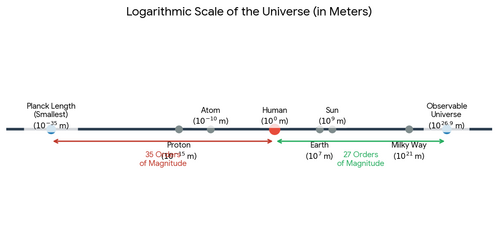
Here is an illustration I hope you find helpful in understanding the size of the Planck length.
If a top quark actually has physical structure that sits right at our current experimental limit, you could fit roughly 6.25 quadrillion (6,250,000,000,000,000) Planck lengths across its diameter.
Approximately 30 to 150 septillion top quarks could theoretically fit inside the volume of the smallest atom if the top quark occupied space right up to its maximum experimental boundary.
The Heavens Declare the Glory of God, and the vast size of the universe does a good job of giving us the scale of His glory, but the complex nature of how much information and space there is in the opposite direction, how seemingly what we measure in the microscopic world infinitely small, is just as unreal
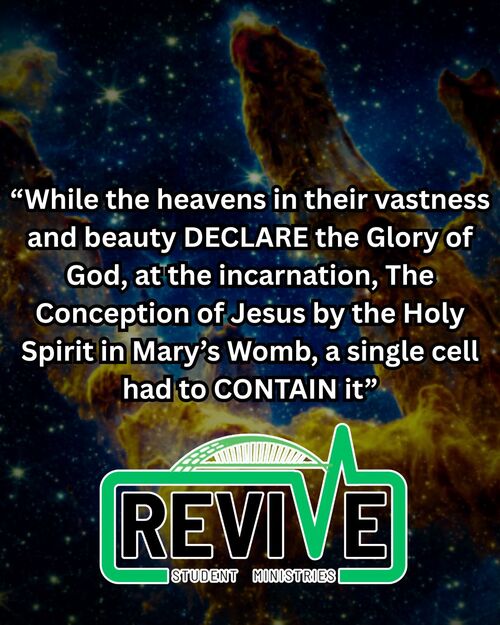
While the heavens in their vastness and beauty DECLARE the Glory of God, at the incarnation, The Conception of Jesus by the Holy Spirit in Mary’s Womb, a single cell had to CONTAIN it.
If a top quark actually has physical structure that sits right at our current experimental limit, you could fit roughly 6.25 quadrillion (6,250,000,000,000,000) Planck lengths across its diameter.
Approximately 30 to 150 septillion top quarks could theoretically fit inside the volume of the smallest atom if the top quark occupied space right up to its maximum experimental boundary.
The Heavens Declare the Glory of God, and the vast size of the universe does a good job of giving us the scale of His glory, but the complex nature of how much information and space there is in the opposite direction, how seemingly what we measure in the microscopic world infinitely small, is just as unreal
While the heavens in their vastness and beauty DECLARE the Glory of God, at the incarnation, The Conception of Jesus by the Holy Spirit in Mary’s Womb, a single cell had to CONTAIN it.
Nothing Is Impossible With God
After explaining this miracle to Mary, Gabriel added one more crucial detail: her relative Elizabeth, who was thought to be barren, was also pregnant. Then came the statement that serves as the foundation for everything we believe: "For nothing will be impossible with God" (Luke 1:37).
Mary's response reveals the heart of faith: "Behold, I am the servant of the Lord; let it be to me according to your word" (Luke 1:38).
If the incarnation establishes anything, it's that nothing is impossible with God. The Gospel of John captures the theological weight of this moment beautifully:
"In the beginning was the Word, and the Word was with God, and the Word was God... All things were made through him, and without him was not any thing made that was made... And the Word became flesh and dwelt among us, and we have seen his glory, glory as of the only Son from the Father, full of grace and truth" (John 1:1, 3, 14).
The Love That Knows No Boundaries
Why would God do this? Why would the infinite become finite? Why would the eternal enter time? Why would the Spiritual take on flesh?
Love.
The love of God knows no boundaries. Out of eternity, the Son stepped into time and put on flesh. The one through whom all things were created became part of creation. He endured this ultimate humility with infinite power to become a developing human starting out as a single cell to save us. More than that, He willingly embraced the cross.
The Creator of the universe—the one who calibrated the fundamental forces with impossible precision, who spoke galaxies into existence, who designed DNA with mind-boggling complexity—chose to experience human life, human development, human suffering, and human death for our sake.
An Invitation to Wonder
The incarnation invites us into wonder. It calls us to stand in awe before a God who is simultaneously transcendent and immanent, infinite and intimate, cosmic and personal.
If there has ever been someone worth knowing better, it's Jesus. The God who became man. The Word made flesh. The light that darkness cannot overcome.
I pray you understand Him better tonight and continue to get to know Him better through this series in the Gospel of Luke
After explaining this miracle to Mary, Gabriel added one more crucial detail: her relative Elizabeth, who was thought to be barren, was also pregnant. Then came the statement that serves as the foundation for everything we believe: "For nothing will be impossible with God" (Luke 1:37).
Mary's response reveals the heart of faith: "Behold, I am the servant of the Lord; let it be to me according to your word" (Luke 1:38).
If the incarnation establishes anything, it's that nothing is impossible with God. The Gospel of John captures the theological weight of this moment beautifully:
"In the beginning was the Word, and the Word was with God, and the Word was God... All things were made through him, and without him was not any thing made that was made... And the Word became flesh and dwelt among us, and we have seen his glory, glory as of the only Son from the Father, full of grace and truth" (John 1:1, 3, 14).
The Love That Knows No Boundaries
Why would God do this? Why would the infinite become finite? Why would the eternal enter time? Why would the Spiritual take on flesh?
Love.
The love of God knows no boundaries. Out of eternity, the Son stepped into time and put on flesh. The one through whom all things were created became part of creation. He endured this ultimate humility with infinite power to become a developing human starting out as a single cell to save us. More than that, He willingly embraced the cross.
The Creator of the universe—the one who calibrated the fundamental forces with impossible precision, who spoke galaxies into existence, who designed DNA with mind-boggling complexity—chose to experience human life, human development, human suffering, and human death for our sake.
An Invitation to Wonder
The incarnation invites us into wonder. It calls us to stand in awe before a God who is simultaneously transcendent and immanent, infinite and intimate, cosmic and personal.
If there has ever been someone worth knowing better, it's Jesus. The God who became man. The Word made flesh. The light that darkness cannot overcome.
I pray you understand Him better tonight and continue to get to know Him better through this series in the Gospel of Luke
Recent
Archive
2026
January
February
March
June
2025
November
1 Kings 18: Showdown on Mt. CarmelOccupy Till He Comes, Daniel 12The Book of Ezra; And Billy GrahamGog and Magog invasion: Ezekiel 38 & 39October 31stFinding the Mission through Despair: 1 Kings 19The Trinity and VictoryNehemiah: Building for God and the Arrival of MessiahThe Eternal Mystery: Understanding the Nature of GodWicked Royalty, Faithful Citizen, a Vineyard, and a ProphetFor Such a Time as ThisThe Millennial TempleRepentance is Necessary: 2 Kings 1
Categories
no categories
No Comments